
Review of the graphic novel adaptation by Damian Duffy and John Jennings
Some pieces of writing stir something deep within and stay with you long after you’ve turned the last page. Parable of the Sower by Octavia E. Butler, adapted into a graphic novel by Damian Duffy and John Jennings, did exactly that. The words, the visuals, the story—they’ve all lingered in my mind, urging me to write. I may have found a new favorite after a very long time. The last time a book moved me this deeply was when I read Zen and the Art of Motorcycle Maintenance—a note to self to revisit that one soon.
Set in a dystopian near future, Parable of the Sower follows a teenager named Lauren Olamina, who has lived a relatively protected life in a walled community. But when that illusion of safety is shattered, she is forced to journey through a world unraveling under climate collapse, economic ruin, and unchecked violence. Lauren suffers from hyperempathy—a condition that makes her feel others’ pain as her own—which is both a curse and her superpower. It sets her apart from the desensitised world around her and becomes a powerful metaphor for radical empathy in a brutal world.

Unconvinced by her preacher father’s religion, Lauren begins to form her own belief system—Earthseed. Earthseed is not just a personal philosophy but a survival strategy for a fractured world. It’s central idea that “God is Change”, becomes the foundation for a spiritual philosophy that is less about salvation and more survival. It is a belief system rooted in community, resilience, and personal responsibility and gives a blueprint for rebuilding amid ruin.
The book feels almost prophetic. It imagines a future that doesn’t feel far off—it feels uncomfortably close. Butler explores the consequences of climate crisis, inequality, violence against women, and the collapse of institutional trust. Through it all, she poses a powerful question: In a world stripped of hope, what does belief look like? What kind of faith could help us not just survive, but rebuild? Through Earthseed, Butler offers an answer that feels deeply relevant to our times.

Parable of the Sower holds a mirror up to the present, warning us of a future we may already be living. And yet, amid all the bleakness, it offers a quiet, enduring kind of hope. Not the hope of miracles, but of mindset, philosophy, and action. A belief that even in a fractured world, there is still power in change—and in how we respond to it.
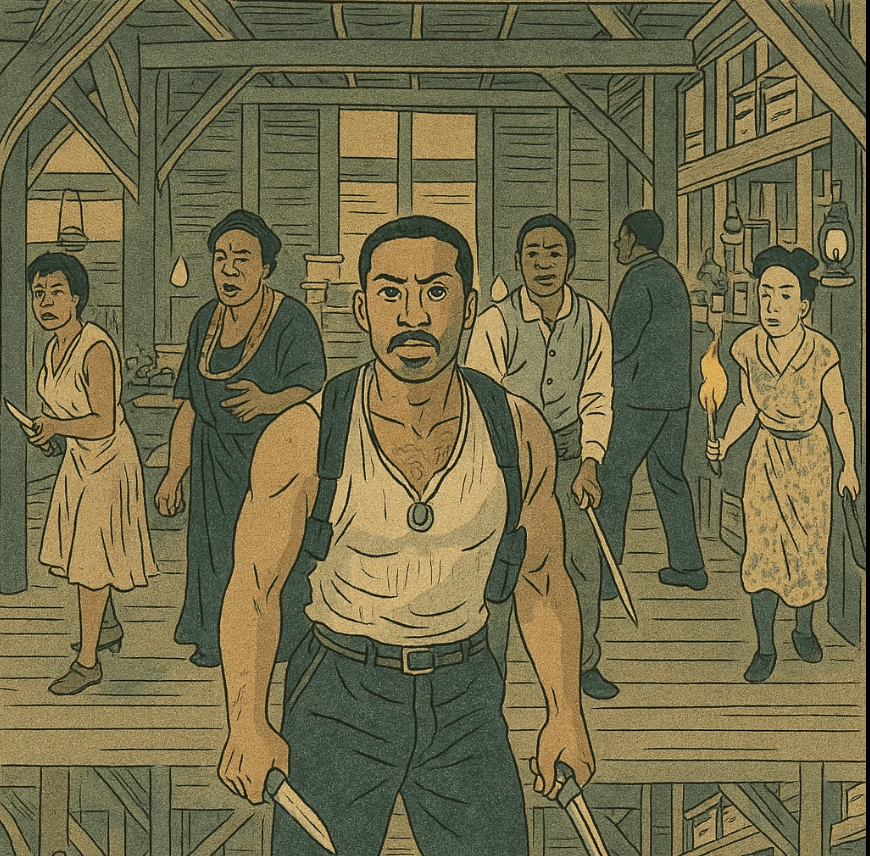
The Earthseed verses scattered throughout the novel read like a new-age scripture—concise and poetic. It’s as though Butler not only imagined a future but also gave us a religion to guide it. The graphic illustrations by Duffy and Jennings heighten the emotional intensity of the narrative, adding visual power to Butler’s visionary words.
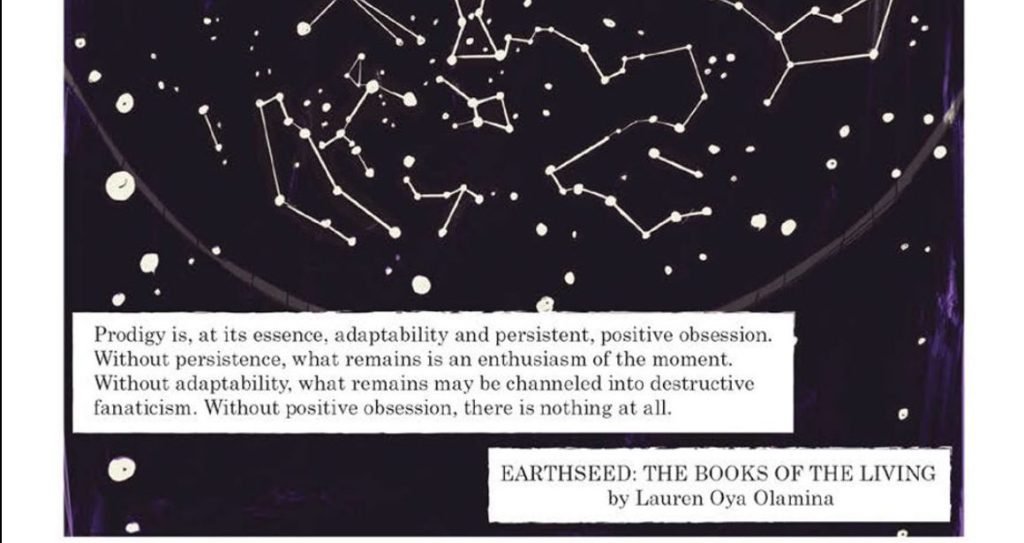
After finishing the book, I found myself reading more about Octavia E. Butler and was struck by how my education in literature had overlooked her—and so many other voices I’ve only discovered later in life. Her life story is as inspiring as her work: one of grit, discipline, and remarkable imagination. In my mind, she is the very prodigy she describes in her book.


 The Third Space
Leave a comment